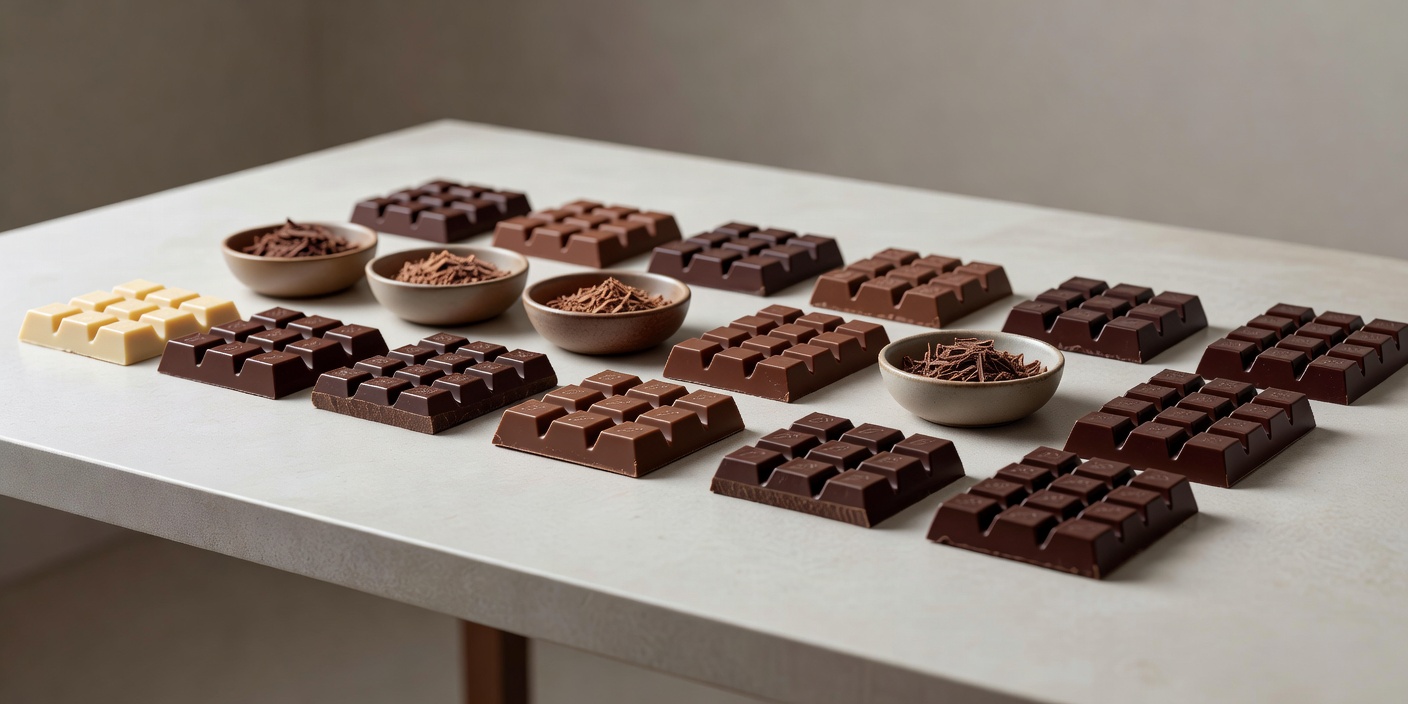
What Does the Percentage Number Actually Measure?
When you see a number like 70% on a chocolate bar, it represents the total weight percentage derived directly from the cacao pod: combining both the non-fat cocoa solids (which carry the tannins, flavonoids, and intense cocoa flavor) and the natural cocoa butter (fat).
The remaining 30% in a classic plain dark chocolate bar is comprised almost entirely of sugar, alongside any optional additions such as natural vanilla or emulsifiers.
The Cacao Spectrum Analyzed
50% to 60% Semi-Sweet & Dark
High sugar ratio. Often masks bad fermentation in commodity cacao. However, when crafted by top artisans, it offers an approachable gateway rich in fudge and sweet vanilla aromatics.
65% to 75% — The Sweet Spot of Gourmet Tasting
Universally regarded by sensory judges as the ideal equilibrium. There is enough cane sugar to subdue extreme astringency, while leaving ample room for origin notes (floral, citrus, berries, earthy smoke) to shine unhindered.
80% to 90% Extra Bittersweet
Extremely low sweetness. Requires exceptionally high-grade beans (such as pure Criollo or Nacional) to prevent the bar from tasting overwhelmingly dry or harsh on the palate.
100% Pure Cacao Mass (Zero Sugar)
Contains no added sugars whatsoever. Only well-fermented, low-roast heirloom beans can be enjoyed at 100% without severe palate fatigue. Highly prized in ketogenic diets and high-polyphenol wellness nutrition.